#6: Deciding to Turn My Back Yard Into a Wildflower Prairie
See how buying a riding lawnmower evolved into a plan to turn my back yard into a prairie and a goal of sowing seeds myself over winter.


I have a lot of yard — about three-quarters of an acre. When we first bought the house, my husband moved the grass using a push mower. But a couple of years ago, he came down with a chronic health issue that made it so he could no longer mow (or do anything particularly strenuous).
Here's an embarrassing fact: I have never mowed grass in my life. When I was a kid, I liked to play outside, and when my dad mowed the grass, he would always run me off with a horror story about a guy he knew who ended up with a hole through his leg because the lawnmower threw a rock at him. I guess his warnings worked because to this day I am terrified to be anywhere near a lawn mower.
So when my husband could no longer mow, I hired a lawn mowing company to do the work for me.
The problem is that they mow every week — even when the grass has barely grown, even when I call and ask them to switch to every other week. They drive their giant mowers across the yard at high speeds, and the result is that now instead of grass in my backyard, I have giant patches of dirt.
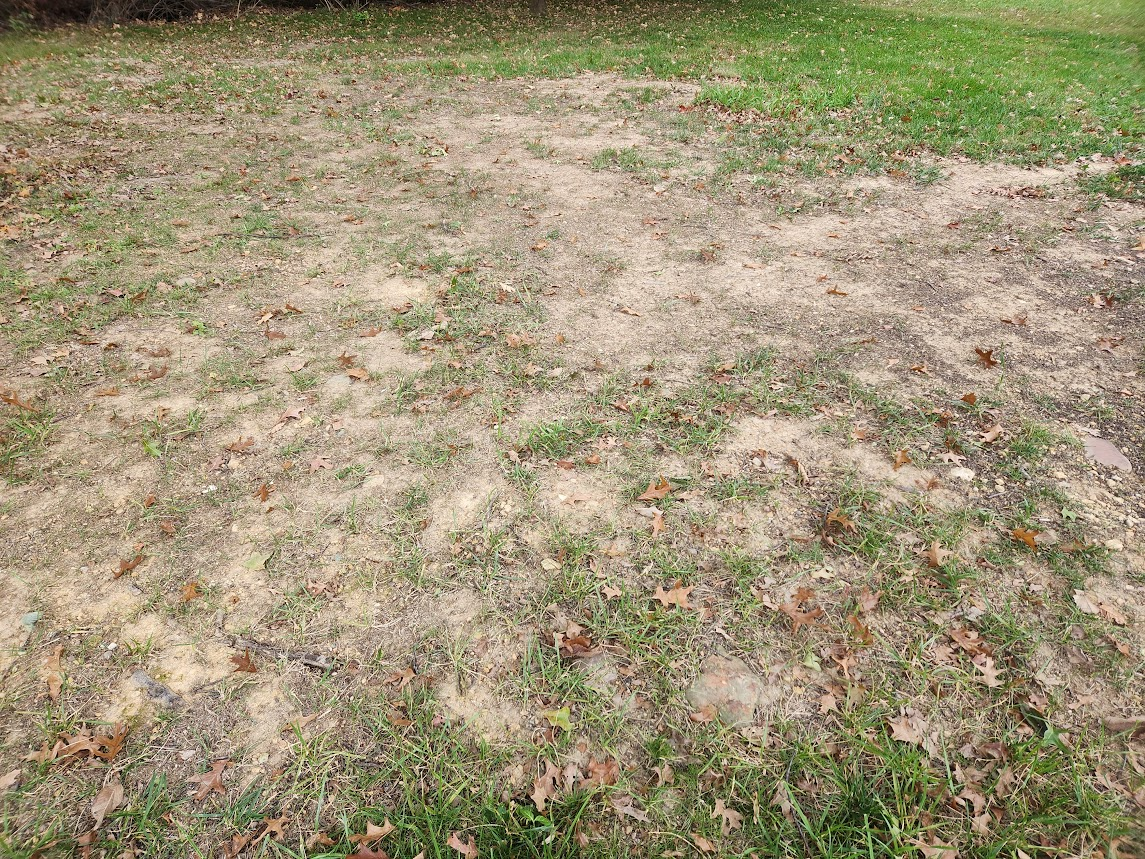
My backyard is basically one big slope downhill, so no grass = nothing to stop the yard from eroding.
My husband's health has been improving over the last year or so, so we decided to let the lawn mowing company go, buy a riding lawnmower, and let him start taking care of it again. And it worked great in the front yard where everything is mostly flat, but mowing the hilly, sloped back yard was terrifying. The last thing we need is for the riding lawnmower to flip over while my husband is out mowing.
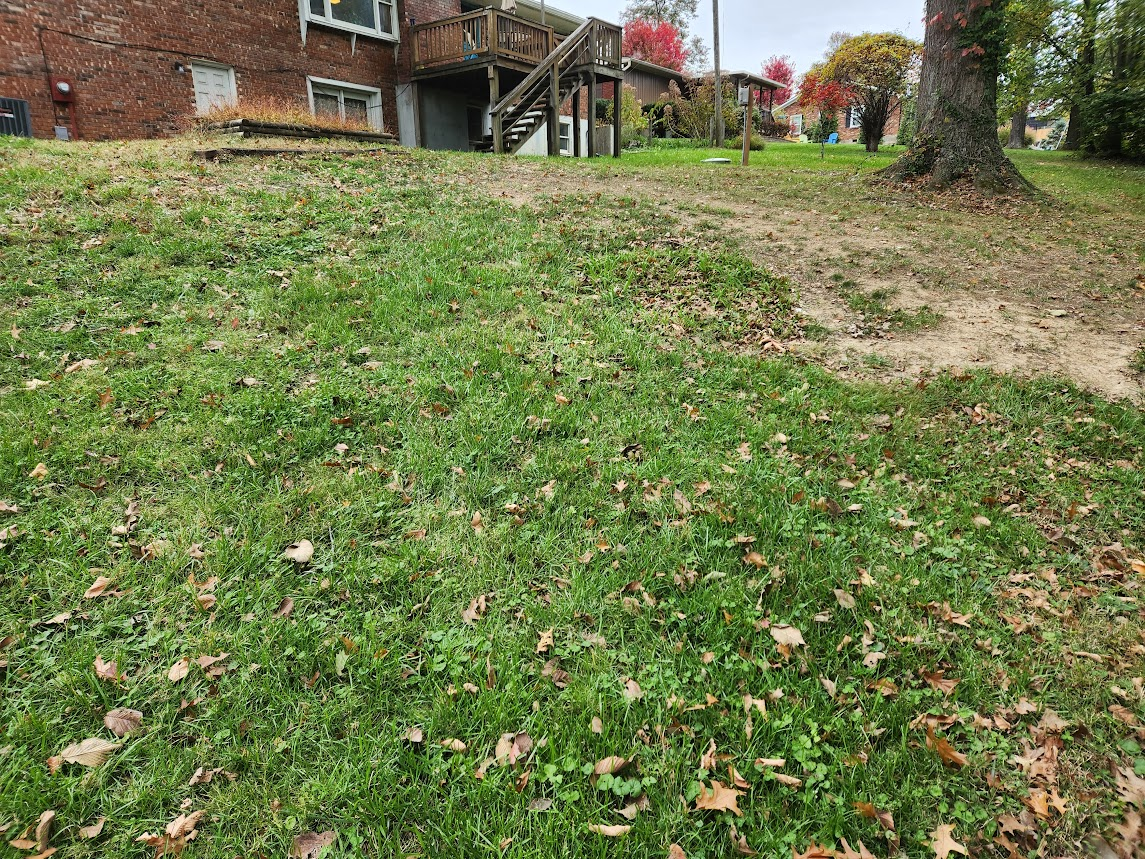
We clearly needed a different solution, and one came to mind: What if I just kill the remaining grass and turn the back yard into a wildflower prairie?
The problem is that buying plugs to fill the entire backyard might send me straight to bankruptcy. I needed a cheaper solution. Thankfully, I know from the native gardening Reddit that it's possible to sow native plants from seed over winter, and winter is right around the corner. So I sat down and started researching methods to see if I could protect my wallet by growing my own plants from seed.
There are a lot of different methods for sowing native plants from seed. The most popular seems to be the milk jug method where you cut gallon milk containers in half and use them to create mini greenhouses to grow your seeds in outside over winter. But since I made this decision pretty late in the year, I didn't have enough milk jugs, and it also just seemed like more work than I really had time for.
Prairie Moon Nursery, the nursery I ended up buying my seeds from, seemed to largely recommend either just chucking the seeds on the ground in a weed-free patch of dirt or artificially stratifying them using a paper towel in the refrigerator. But I have a lot of birds that I feel would just eat all of the ground-sown seeds, and I didn't really want to give up my refrigerator space for artificial stratification, especially given that we were heading into winter and the world would be one big refrigerator.
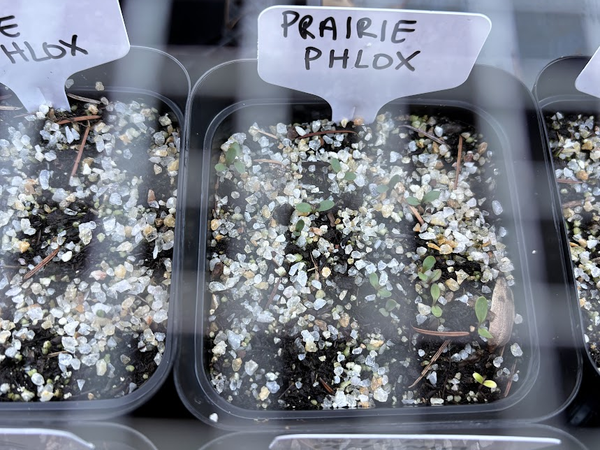
Finally, I found this guide from the Wild Seed Project that seemed like just the sort of simple approach I wanted to take. You basically put the seeds into pots of dirt, cover them with a little sand, and sit them outside over winter.
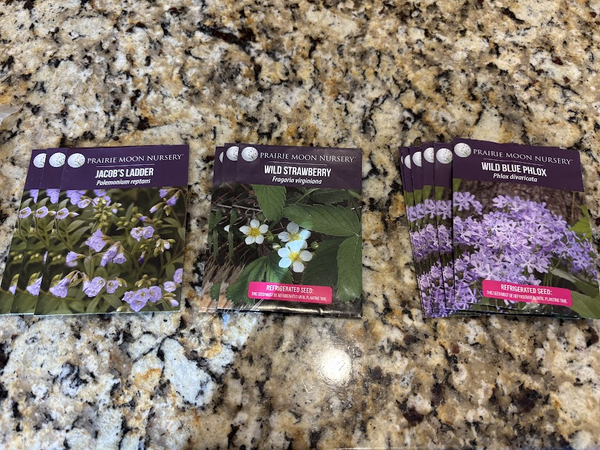
I also needed some seeds, so I turned to Prairie Moon Nursery with honestly not quite enough of a plan. I basically just bought things that looked pretty and had similar germination codes. This will probably burn me when spring rolls around — assuming any seeds I sow actually sprout — because I'll have a lot of plants but no plan for where they'll go. But that's a problem for future me to deal with.
I ended up seed buying packets of:
- New Jersey Tea (Ceanothus Americanus)
- Lance-Leaf Coreopsis (Coreopsis Lanceolata)
- Wild Geranium (Geranium Maculatum)
- Rose Mallow (Hibiscus Laevis)
- Bradbury's Monarda (Monarda Bradburiana)
- Jacob's Ladder (Polemonium Reptans)
- Wild Petunia (Ruellia Humilis)
- Little Bluestem (Schizachriyum Scoparium)
- Wild Blue Phlox (Phlox Divaricata)
- Prairie Phlox (Phlox Pilosa)
- Common Blue Violet (Viola Sororia)
- Common Blue Violet, Pink Form (Viola Sororia F. Rubra)
Altogether, it was 1,430 seeds for $54.04. If I manage to get even 10% of the seeds to turn into plants (ending up with 143 plants), it will save me almost $1,000 off the cost of buying those plants as plugs at $6 a piece.
In my next post, I'll walk through what I bought for my winter sowing project and exactly how I did it — along with pictures.
Next Post:
 Jessica Greene