#11: I'm Not a Landscape Designer
After spending an entire day trying to plan how I would plant a new section of my yard, I decided to abandon my plans — and planning in general.
My husband and I have this thing we say when we're struggling to communicate our ideas effectively and getting frustrated with each other. It's that I'm a math-brained person, and he's an art-brained person.
It helps us remember that the way we see things, prefer to plan, and envision projects running are very different, so one of us needs to just let go and let the other take the reigns before we end up in a fight over how something ridiculous like how to unload the dishwasher.
Outside of our personal communication bubble, math-brained and art-brained mean nothing. But for me, math-brained represents my complete inability to envision things.
When I read, I don't really form pictures of characters or settings. It just doesn't happen in my brain, and I don't feel like I need those things. My husband notices things out in the world — sometimes really large and obvious things — that I miss completely. And don't even get me started on my opinion of instruction manuals for putting things together that only have pictures and no words.
So I probably should have known when I sat down to try and plan the layout for my new back yard wildflower gardens that it wasn't going to go well.
At first, I'd hoped to use an app or online tool to do the job. Someone suggested getting a top-down picture of my yard from Google Earth and using that to plan things out, so I started there.
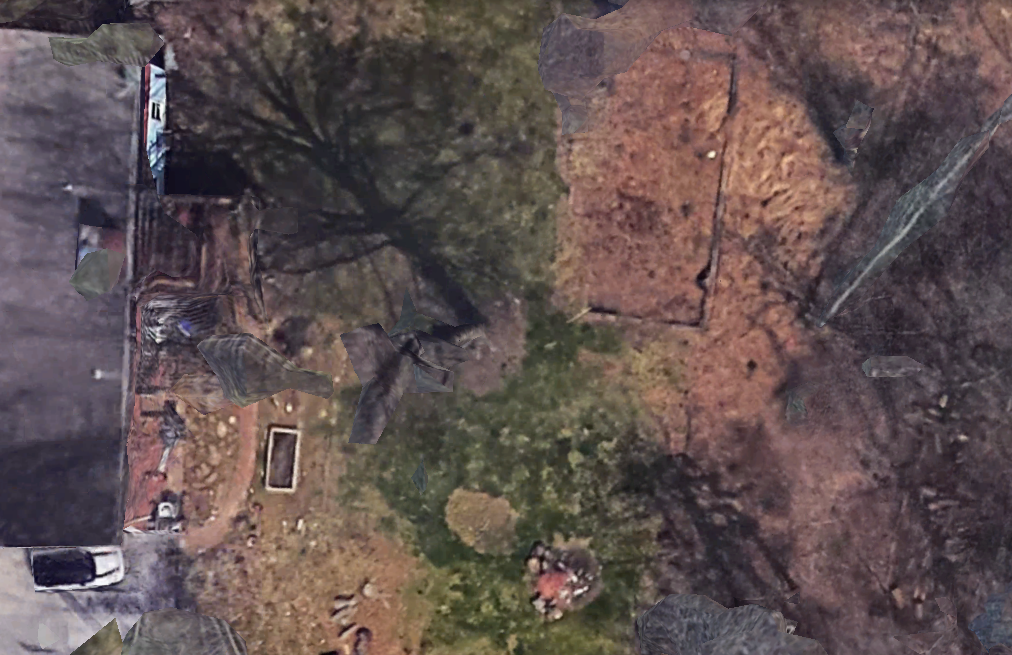
Maybe it's just me, but this looks more like (Stranger Things reference incoming) the upside-down version of my backyard than anything I'm used to looking at. It doesn't show the areas where there are steep hills, the trees look like smoke monsters, and there's no way to know the size of the area I'm planning to convert.
The 3D version is somehow even weirder:
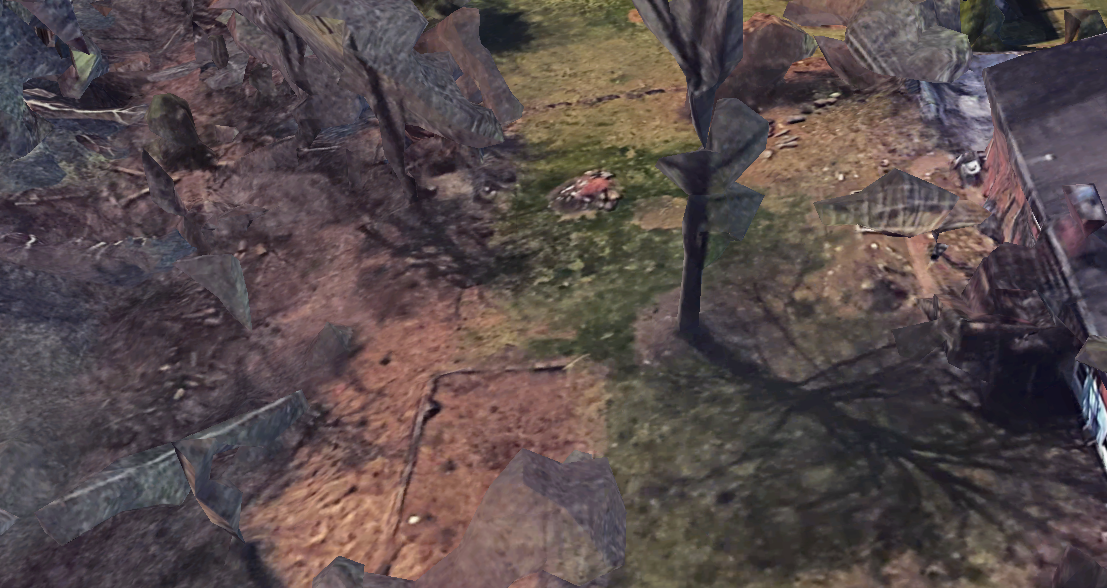
So for me, Google Earth planning was not going to be a viable option.
Next, I thought I might try to use one of the native landscape planning tools. I tried this Design A Pollinator Garden Tool from Blazing Star Gardens first, but the whole thing is built in Google Slides, and I hate slideshow programs on the best of days. It was all a bit overwhelming and seemed like something I would need to spend weeks tinkering with to get just one small area plotted out. Also, the fact that it doesn't have gridlines makes my math brain melt.
Then, I though I'd give Native Garden Planner a try. The first three plants I searched for to add to my design — Purple Coneflower, Butterfly Weed, and Mistflower — weren't available in its image database. So again, I was out of luck.
I considered going back to my old trusty spreadsheet that I used last year when planning my fall plantings, but I want to have irregular and curved borders for these beds, and spreadsheets don't really work for that.
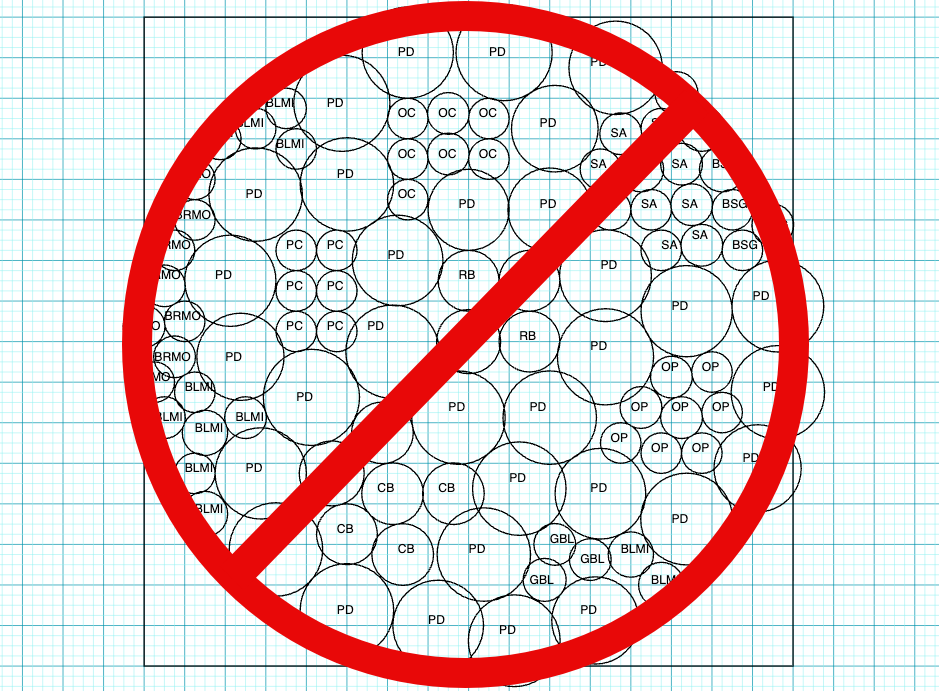
Finally, I decided I'd just draw it out by hand, but I didn't have any graph paper. Luckily, I found a free online graph paper tool (Virtual Graph Paper), and I spent a few hours trying to put together a plan using that. Here's what I ended up with:
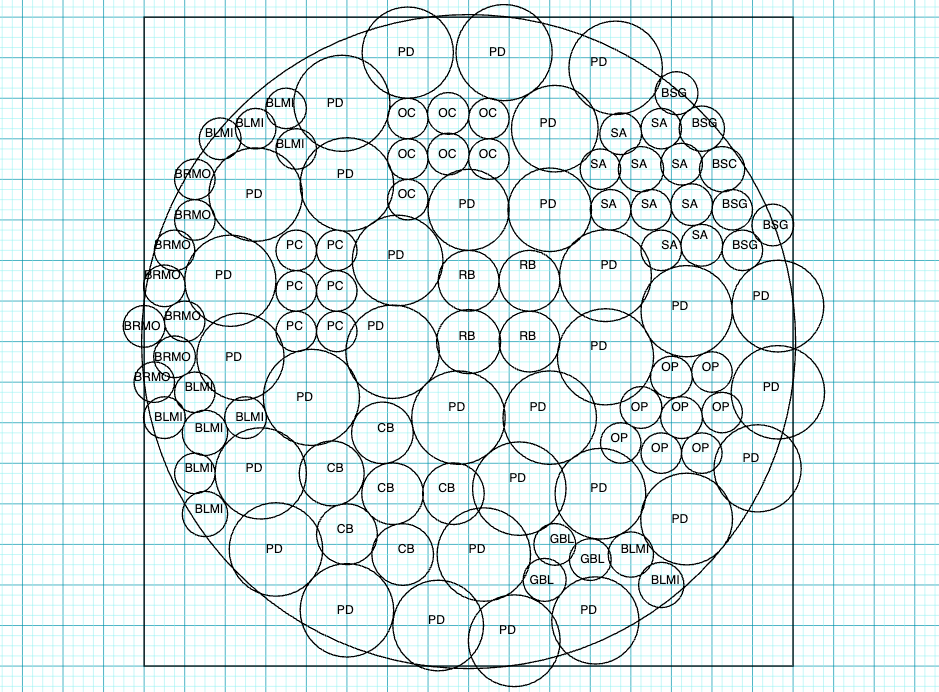
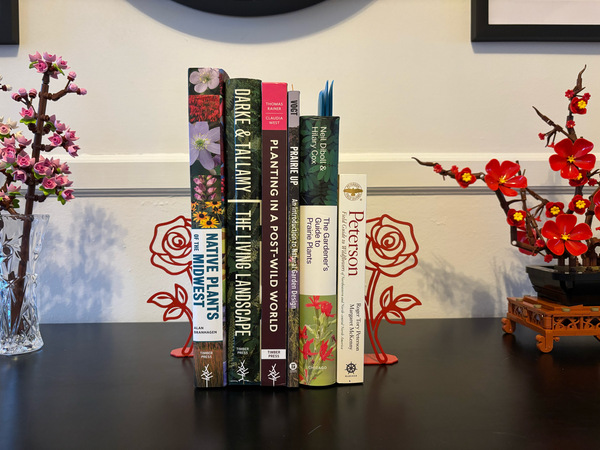
Using what I learned from my winter reading, I planned to have several clusters of different species, each encircled by grasses to keep the taller flowers from falling over and to provide some visual variation.
I was pretty happy with this plan — for a few hours at least.
The first bit of doubt creeped in as I was comparing prices for the plants I wanted between Prairie Nursery and Prairie Moon Nursery. Prairie Moon Nursery's description of Red Beebalm had a bit of detail that Prairie Nursery (which I had used to select my plants originally) didn't: "This plant requires a little extra elbow-room for better air circulation - it is prone to powdery mildew, particularly in overcrowded sites."
I looked back at my plan. The Red Beebalm, placed directly in the center of my plan, was pretty crowded in. I wondered if that was going to be a problem.
Later that night, I had the idea to get inspiration by looking at the pictures of gardens people had posted in the native plant gardening Reddit. I noticed something interesting: the pictures I liked the most had flowers growing into other flowers — they weren't surrounded by a bunch of grasses at all.
Between those two things, I decided that my whole plan needed to be thrown out. Instead, I just went to Prairie Nursery, bought some custom kits filled with the plants I'd selected, and decided to put them in the ground in whatever way feels right once spring arrives. The new plan is to expect to have to adjust them in the future when I can look at them in real life and decide what needs to be changed.
My new plan-less plan is how I approached gardening the first time around during my don't-know-about-native-plants years, and I think it was starting to look really nice before the retaining wall installation ruined it.
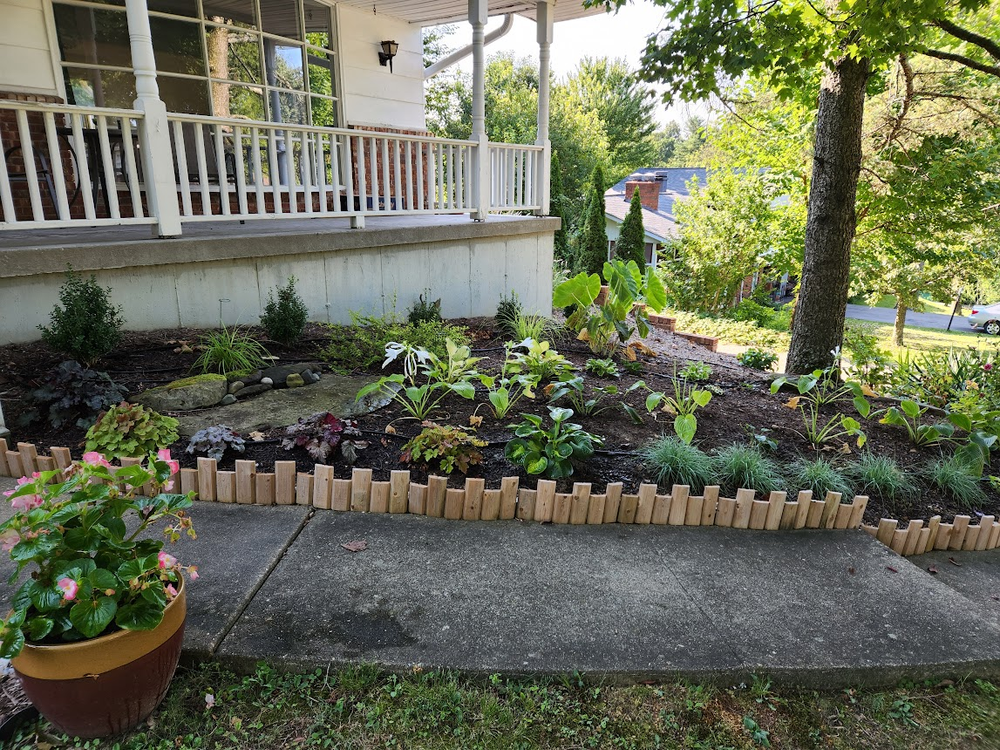
I'm not a landscape designer, and I don't want to have to become one to turn one yard into a place that supports wildlife and brings me joy. Besides, Sow and See is all about trial and error, right?
The one thing I did decide to do is use Gemini's image creator to help me brainstorm some ideas for how I want things to look much more generally, and I found that really helpful. For example, I like the stacked bricks around these sections of flower beds, as well as having them surrounded by grass walking paths to make everything look more intentional.
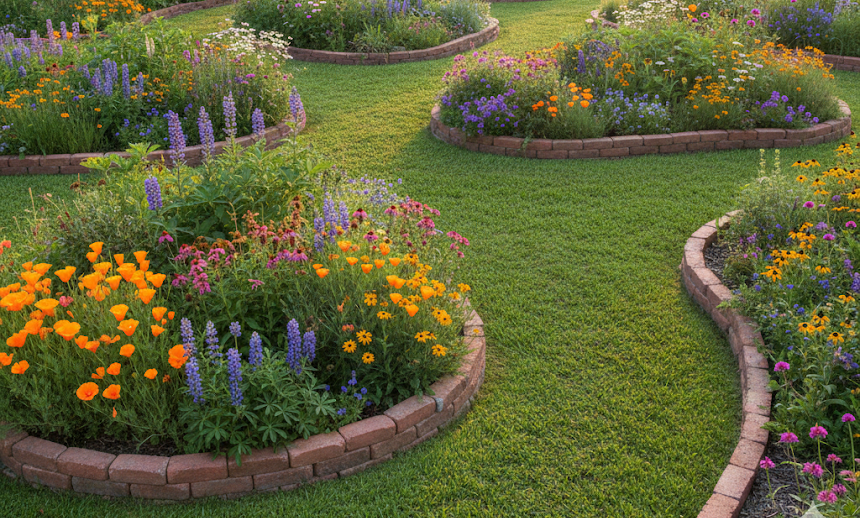
I also like the idea of having a garden arbor somewhere in the yard and covering it with native honeysuckle.
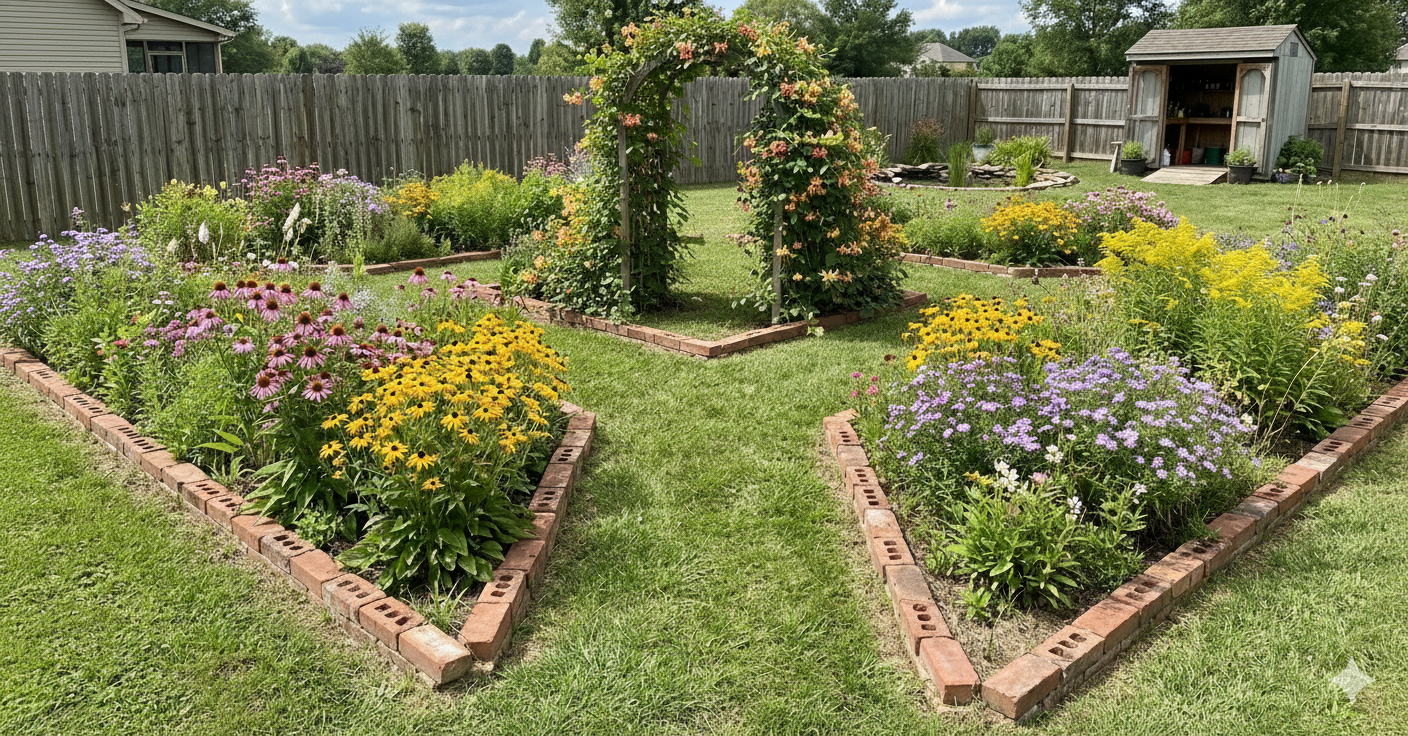
And I love the idea of layering down from the forested section of my backyard with shrubs, wildflowers, and ground cover. I especially like the curving as my yard moves into my neighbor's yard (this one is a picture of my actual yard that I asked it to add plants to).
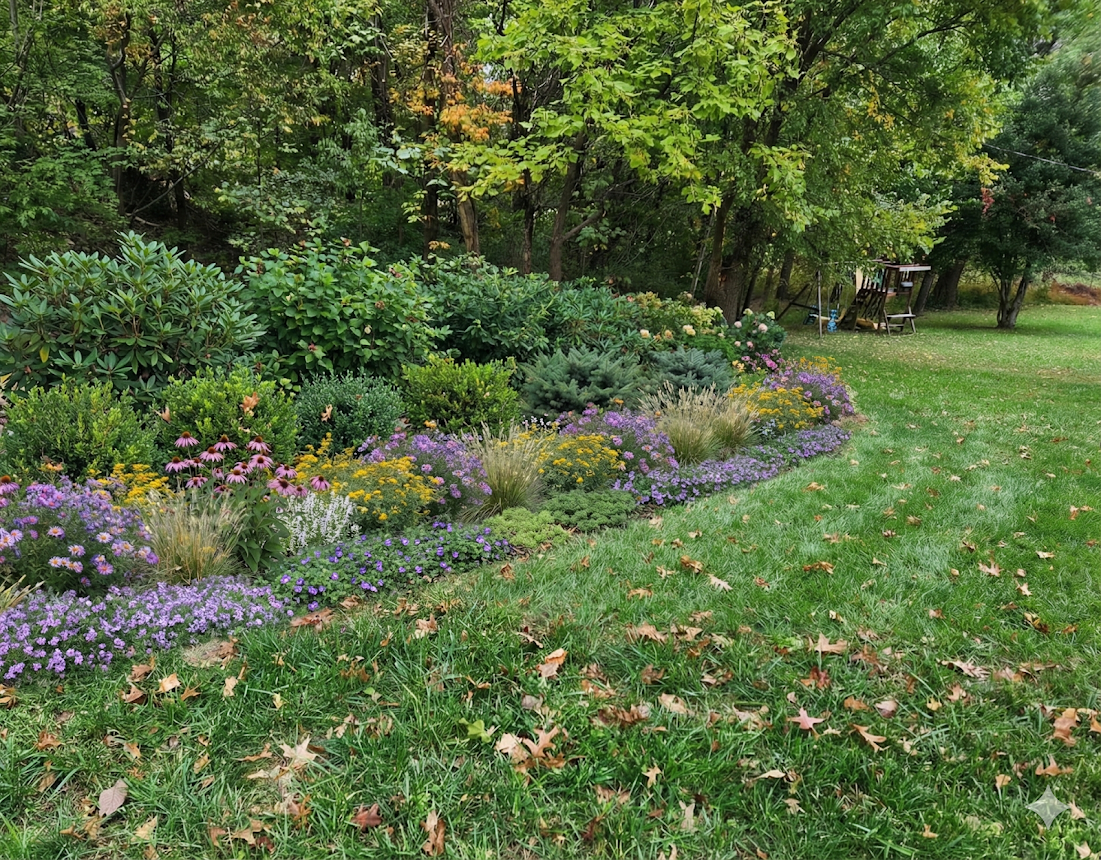
With the exception of those broad strokes, that's all the planning I'm planning to do. Beyond that, the plan is to stick things in the ground, hope for the best, and rearrange in the future if it doesn't work. Make sure to subscribe below if you want to see how it plays out.
Next Post:
 Jessica Greene