#9: My Winter Reading List
I read five books on native gardening over the winter. Here's what I thought about each of them and which may be helpful for other beginners.
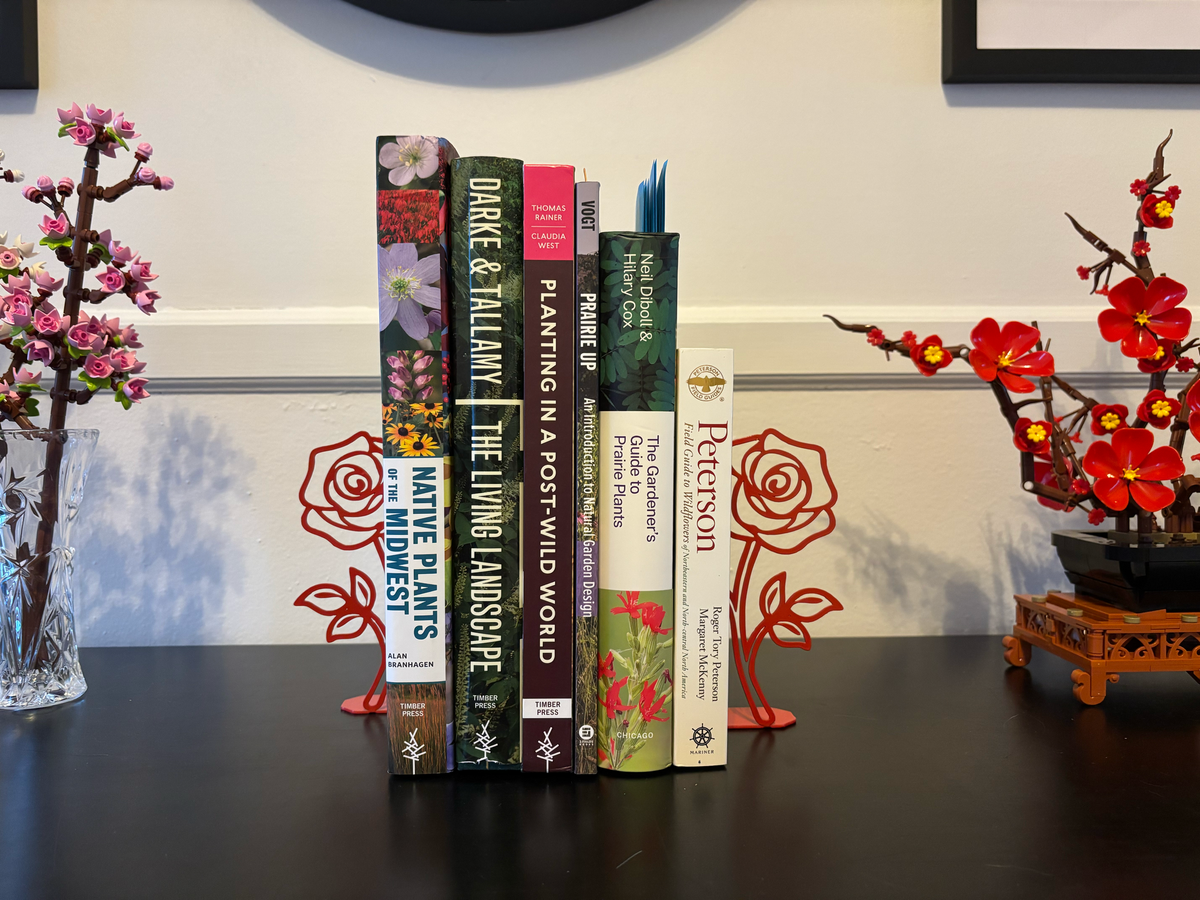
It's cold here in Indiana in winter, and the cold and I are not friends. As a result, I don't spend much time working in the yard in winter. But since I'm just getting started on my native gardening journey and am excited to continue it even when the weather won't cooperate, I decided to load up on some reading material to get me through my least favorite season.
Based on some recommendations I found while searching online (and some Amazon reviews I read), I chose five books. Below, I'll share my thoughts on each of them — what I liked, what was useful, and what was a bit overwhelming about some of them — so you can decide if they might be helpful for you to read too.
The Gardner's Guide to Prairie Plants by Neil Diboll and Hilary Cox
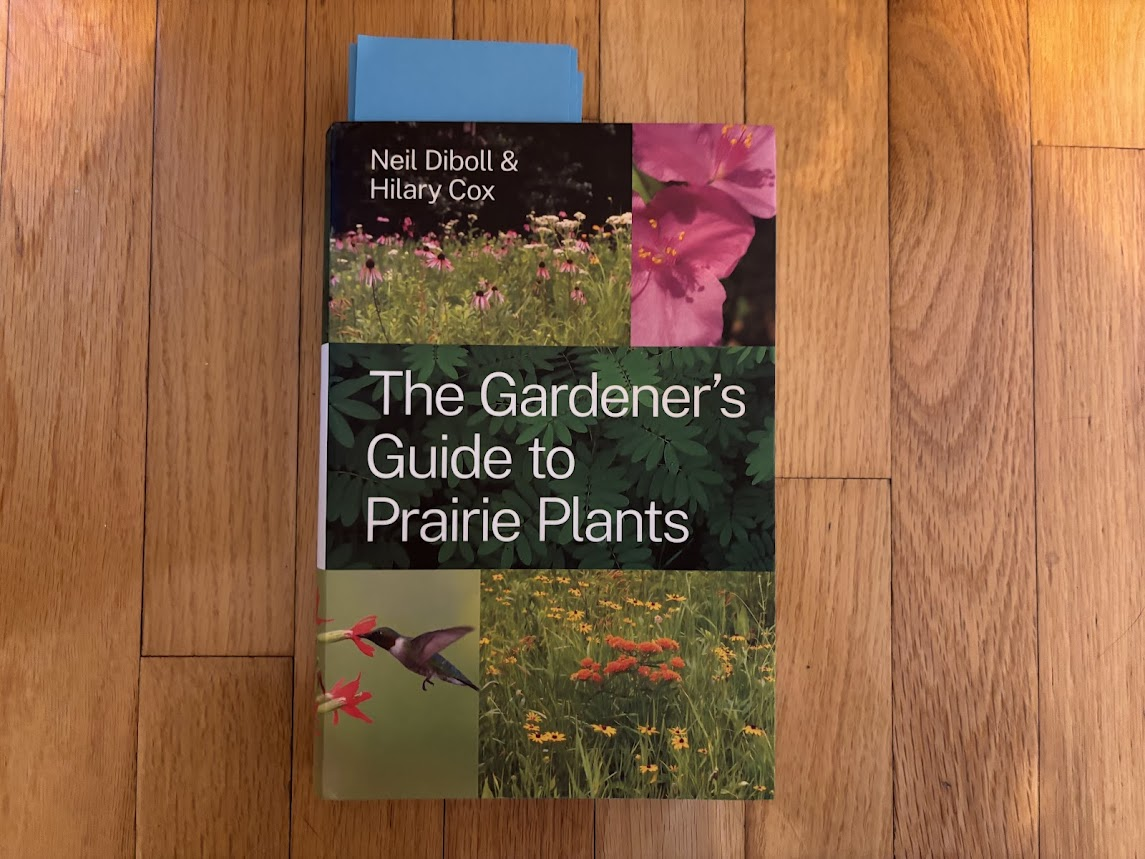
If you're a beginner like I am, or if you can only afford to buy one book about native gardening to learn how to get started, this is the one I'd recommend. I bought it because I work at the computer all day, and I wanted a way to discover plants I might like without having to sit at the computer even longer.
The book is essentially an encyclopedia on native prairie plants. There are nearly 300 full-color pages showing the areas each plant is native to along with every stage of the plant: what its leaves, flowers, and seeds look like, how it looks when it's emerging, and how the mature plant looks. In that way, it was exactly what I was looking for.
But it ended up being a lot more too. The first chapters of the book are a true guide for beginners, teaching you how to identify your soil type, how to amend your soil if needed, how to convert your lawn to a prairie garden, and how to maintain it. I found this information extremely helpful, and it was presented in a way that didn't assume you already knew a lot about native gardening coming into it.
The descriptions of the plants themselves are also extremely helpful. It tells you what types of light, moisture, and soil conditions each plant thrives in, how long the plant tends to live, what insects it attracts, how aggressive it is, when it blooms, and even how to propagate it. Some of these things, like average lifespans, I've never seen on a nursery website and never once thought to consider.
The one downside is that the book is fully focused on prairie plants (there's even a chapter on how to burn your field), so for people outside of the Midwest, the plant encyclopedia portion of it probably won't be as useful. Even though I'm in the Midwest, where I live is more woodland than prairie, so while I was able to use the book to find a fair number of options for the full sun areas of my yard, there was almost nothing featured that will thrive in the shaded, tree-covered parts.
The Living Landscape by Rick Darke and Doug Tallamy
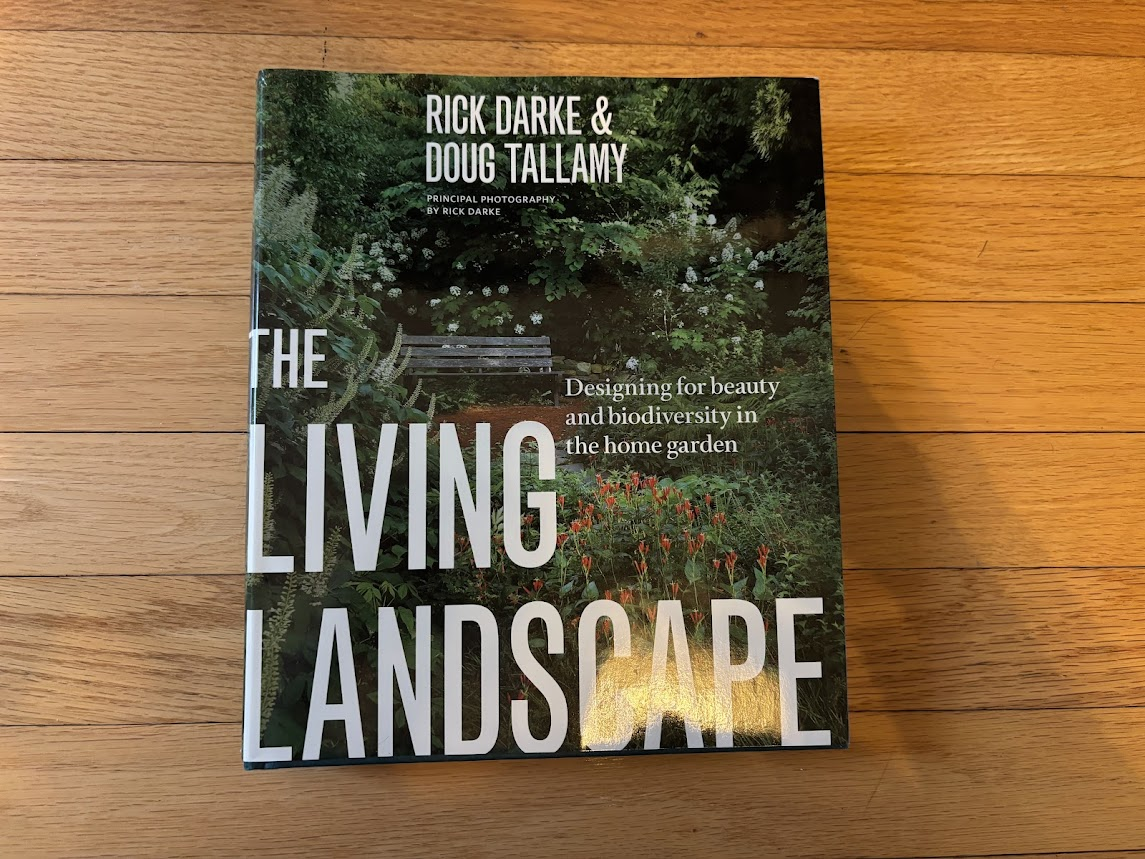
Of the three books I bought related to native landscape design, this one was the most helpful and accessible for beginners. It's beautifully written, very philosophical in places, and is focused largely on creating landscapes that mimic how plants and trees grow on their own when humans don't intervene.
A good portion of the book is focused on teaching you about the layers of a landscape: the canopy, understory trees, shrubs, herbaceous plants, and ground layer. Most of the other books I bought were very technical and detailed when it came to discussing landscape design, and this was the only one that just made sense immediately and gave me a lot of ideas on how to structure my plantings in a way that will be varied and interesting to look at.
The book is also filled with gorgeous full-color pictures of different landscapes and types of plants. The plants in the pictures are identified by name, but you won't find any of the detailed information on them that The Gardner's Guide to Prairie Plants has, so anything you're interested in, you'll have to go look up separately.
Overall, I found it was a book that's worth reading word-for-word because it's so full of little tips and tidbits (two of my favorite learnings were that Virginia Creeper, which is prolific here, won't choke out trees, and also that a great way to plan the shape of your garden is to use a garden hose), and it's definitely one I'll want to read through again as I'm planning out my garden in the coming months.
Prairie Up by Benjamin Vogt
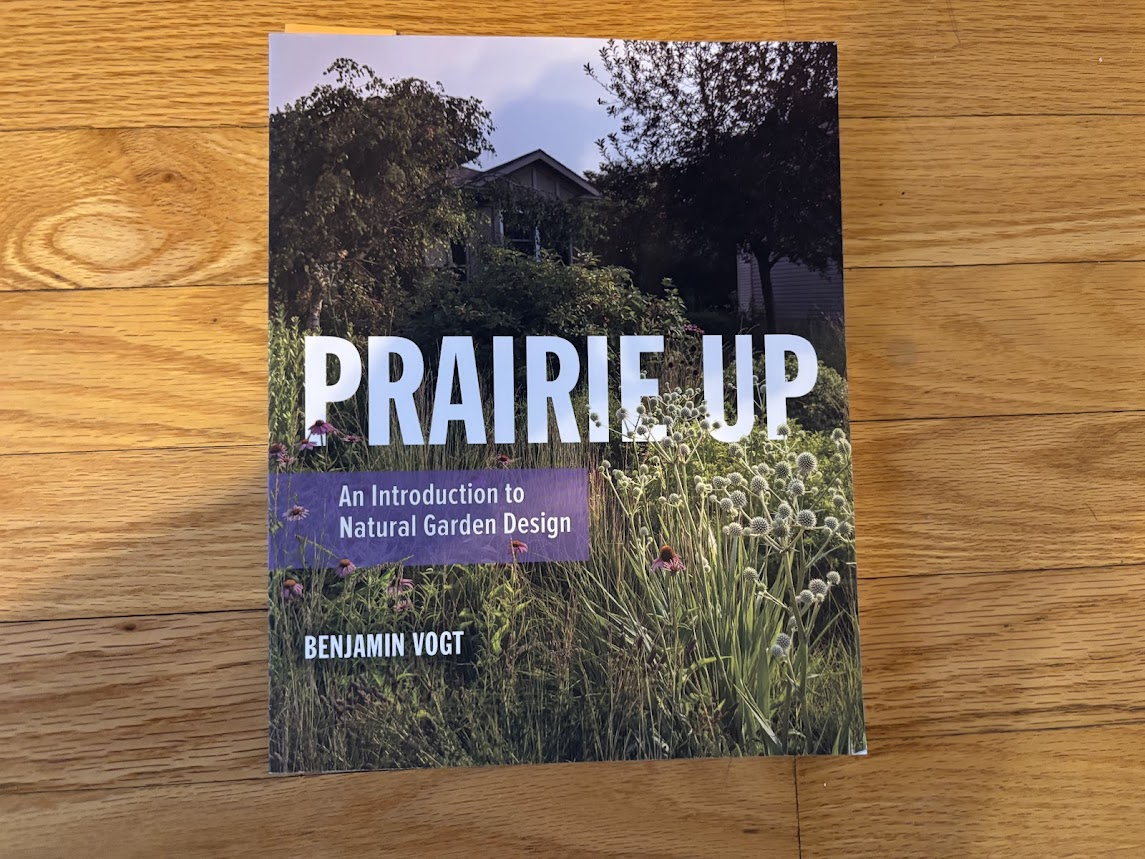
Prairie Up was definitely a more advanced guide to native landscape design than The Living Landscape, but I did still get value from reading it even though a lot of it was a bit over my head at this point.
I think this one could be particularly valuable for people who live in HOAs with strict rules or neighbors who are likely to complain about things looking overgrown. It gives lots of great examples of cues to care: design choices that show the wildness of a native garden are intentional rather than unkempt.
There are also some tips I found really helpful related to planting individual plants in clusters and using prairie grasses as fillers to keep taller plants from falling over. He also gives specific examples of designs you can use and walks through a matrix approach to planting that you can replicate with your own selected plants.
This was actually the first of the five books I read, and some of it was just too advanced for where I was at the time. But it's definitely one I want to come back to and read again now that I've finished the other books to see if I'm able to follow some of the more detailed instructions better now that I know more of the basics.
Native Plants of the Midwest by Alan Branhagen
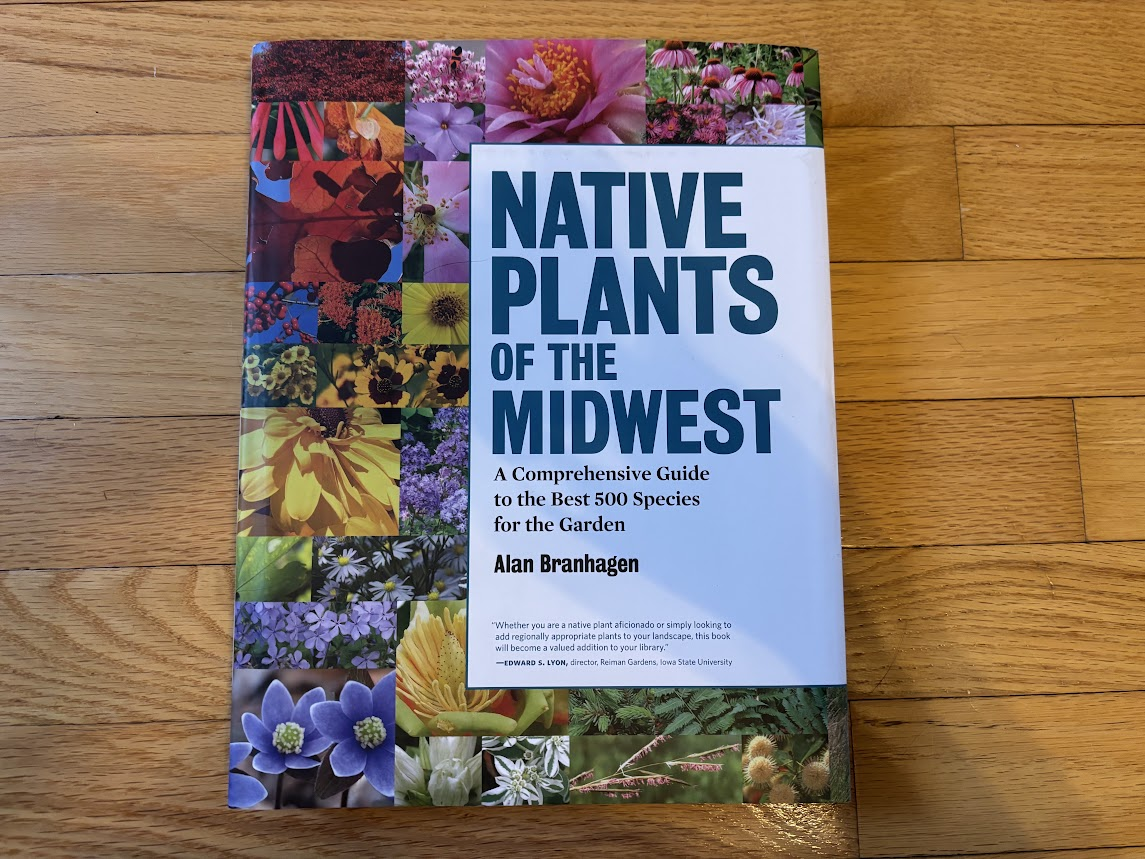
Based on the title, it's clear that this isn't going to be a good choice if you're not in the Midwest. I read this one after The Gardner's Guide to Prairie Plants, and it kind of ruined me for this book. I found myself disappointed with the level of information provided for the plants listed.
Each plant gets a description, but it reads a lot like a Wikipedia entry and isn't always helpful in determining if you should plant it or not. And while there are a lot of pictures, they're not always near the description of the plant, and often they're not super helpful. For example, a lot of the pictures of trees show the tree without any leaves, and a lot of the pictures of the flowers are so close up that you can't get a sense of how large the plant is or what it looks like as a whole.
I will say that it could be a really useful guide if you're looking to plant trees; it's one of the only resources I've come across that goes over native trees in detail. However, I already have more trees than I can manage, so I didn't find it helpful.
If you just want a guide that lets you see a lot of different options for native plants in the Midwest, it will work. But if you're wanting to use the book to help you decide what to plant and how to put things together, you'll have to combine what you see in the book with additional research online.
Personally, I'm hoping in the future that I can find something like The Gardner's Guide to Prairie Plants that's written for woodlands.
Planting in a Post-Wild World by Thomas Rainer and Claudia West
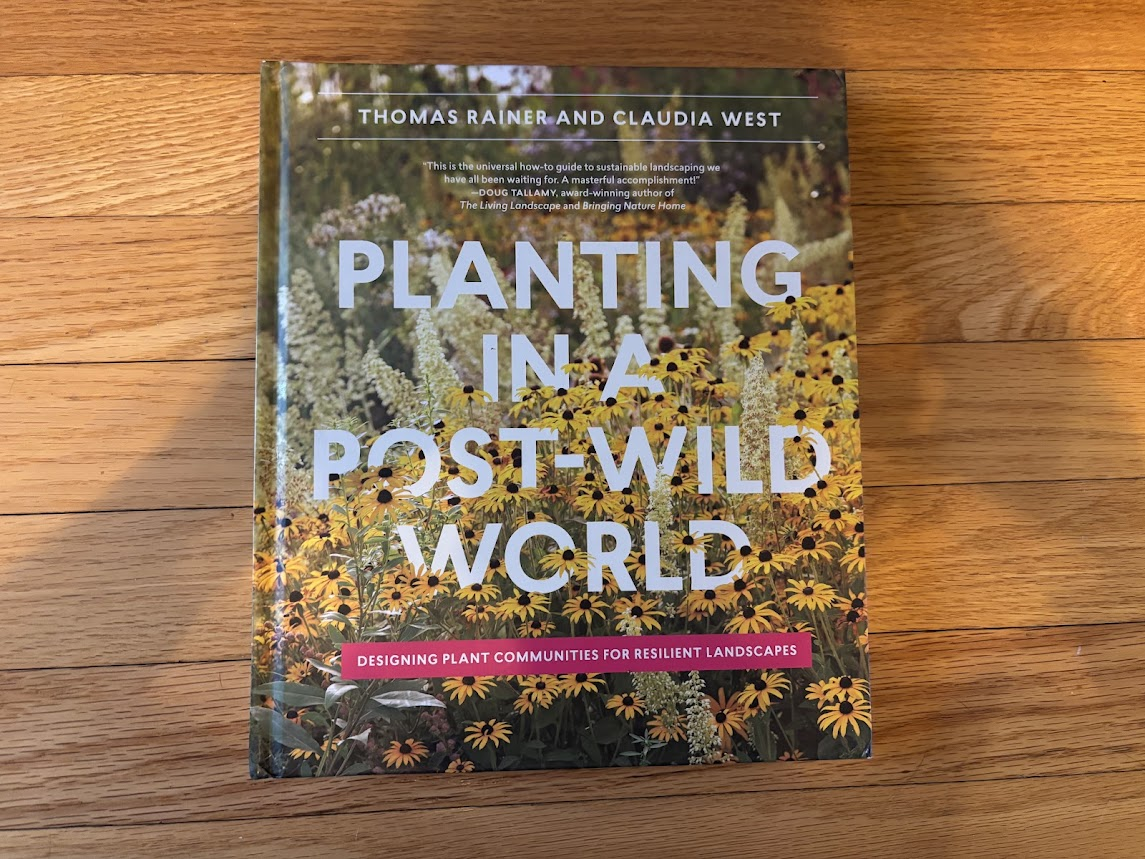
I didn't make it all of the way through this one because it's just way too advanced for me at this point — though I think it will be a good one to come back to in a year or two. It feels more written to other professional native landscapers than it is for hobbyist gardeners and reminded me a lot of the complexity of permaculture.
The book is focused on designing plant communities based on how plants will grow and interact together. For example, one of the tips is selecting plants with different rooting behaviors so that the plants' roots won't compete with each other for water or space.
And while that sounds like a super smart and valuable thing to do, I find myself overwhelmed most of the time just doing the research to figure out what is actually native in my area and will work in the amount of light and type of soil I have.
I will definitely come back to it later, however, once I'm starting to feel like more of an expert in all of this and have a greater understanding of basic things like what's native in my area. I definitely think learning what the book is teaching would help me create gardens that last longer and look like what I want them to long-term, but I definitely need a few seasons of trial and error before I'll be ready for that.
That's everything I read over the winter in preparation for the spring buying and planting season. If you have other recommendations for books I should check out, I'd love to hear them!
It's starting to feel like it's close enough to the planting season that I can start planning things out and purchasing the plants I need, which I'm very excited to do now that I've done my winter reading and have a much clearer picture of what I want things to look like.
Next Post:
 Jessica Greene